Zinc is a trace element the body does not store: it comes from food, day after day. Swiss law authorises two sentences on zinc and the skin or the cells. Here is which ones, where to find zinc on your plate, and why you should not add up too much of it.
What is zinc?
Zinc is a trace element, that is, a mineral the body needs in very small amounts. It is involved in the work of a great many enzymes, in the growth and division of cells, and in the immune system, as the fact sheet of the Office of Dietary Supplements at the US National Institutes of Health sums up.
The body has no real reserve of zinc: it therefore needs a regular supply from food. If zinc is talked about so much in beauty, it is because one of its official claims concerns the skin directly.
What does Swiss law say about zinc and the skin?
In Switzerland, the authorised health claims are set out in Annex 14 of the FDHA Ordinance on Food Information. For zinc, two of them concern the skin and the cells. Here they are, word for word:
- “Zinc contributes to the maintenance of normal skin.”
- “Zinc contributes to the protection of cells from oxidative stress.”
They may only be used for a food that is at least a source of zinc within the meaning of the law, that is, at least 15% of the nutrient reference value. A promise such as “clear skin”, “purified complexion” or “blemish control” is not an authorised claim for a food or a food supplement.
The list contains other claims for zinc, notably on the immune system, hair, nails and vision. Here we keep to the skin.
How much zinc a day?
Zinc needs depend on what you eat. In 2014, EFSA, the European Food Safety Authority, set reference intakes for adult women ranging from 7.5 to 12.7 mg a day, according to the amount of phytates in the diet.
Phytates are compounds found in wholegrain cereals and pulses: they slow down the absorption of zinc. A diet very rich in wholegrain cereals and pulses, such as a vegetarian diet, therefore calls for a little more zinc for the same result.
The limit not to exceed
The tolerable upper intake level set for adults is 25 mg of zinc a day, from all sources combined: food, fortified foods and supplements. This is the value adopted by the Scientific Committee on Food and taken up by EFSA.
According to the National Institutes of Health, too much zinc over time can in particular interfere with the absorption of copper. This is why taking several supplements that each contain zinc means doing the sums.
Where to find zinc on your plate?
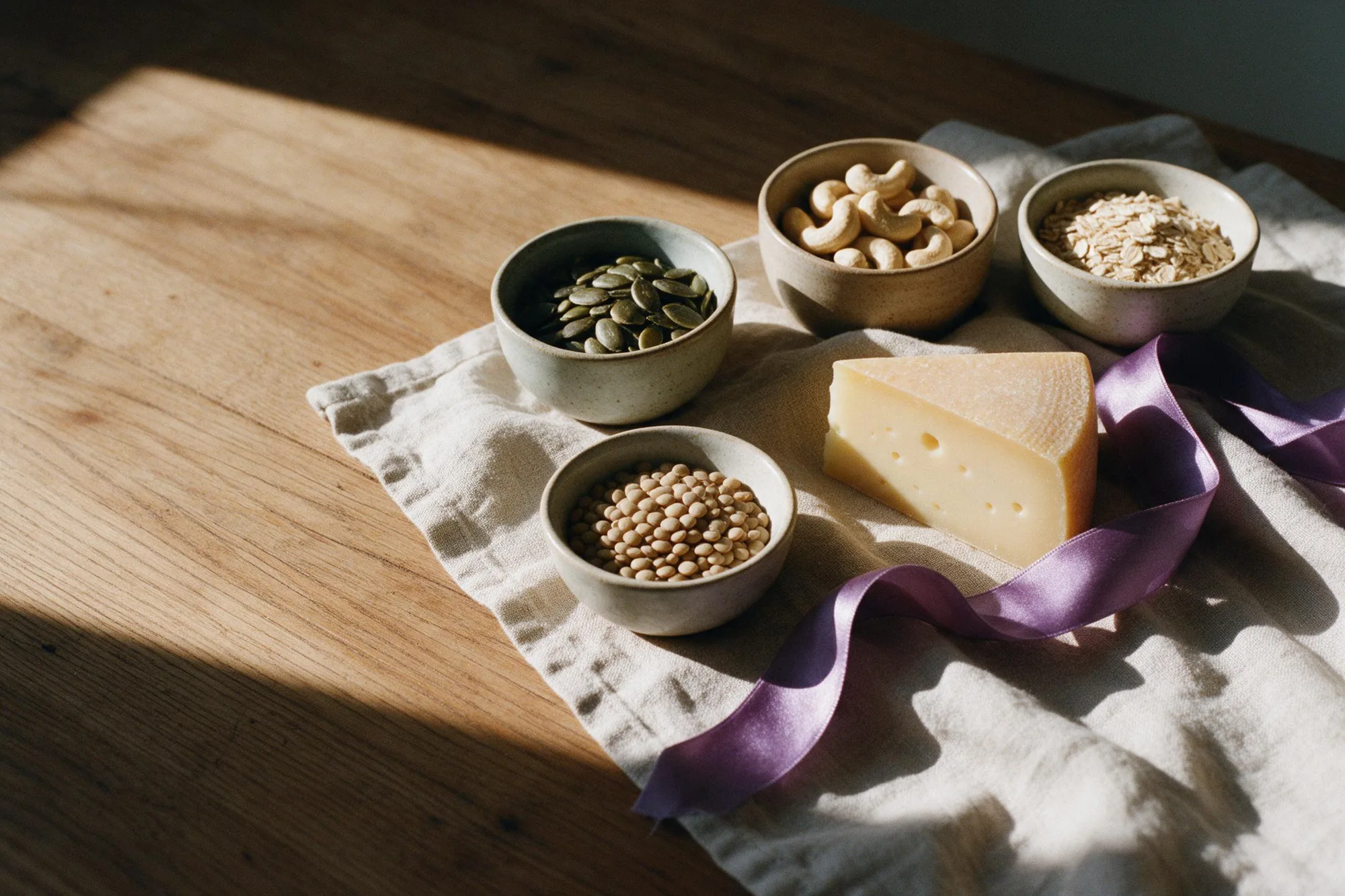
Zinc is found mainly in foods of animal origin (meat, seafood, cheese, eggs) and in some plant foods (pumpkin seeds, pulses, oat flakes, wholegrain cereals). Fruit and vegetables contain very little.
| Family | Examples | Good to know |
|---|---|---|
| Seafood | Oysters, crab, prawns | Oysters are by far the richest |
| Meat | Beef, pork, poultry | Zinc that is well absorbed |
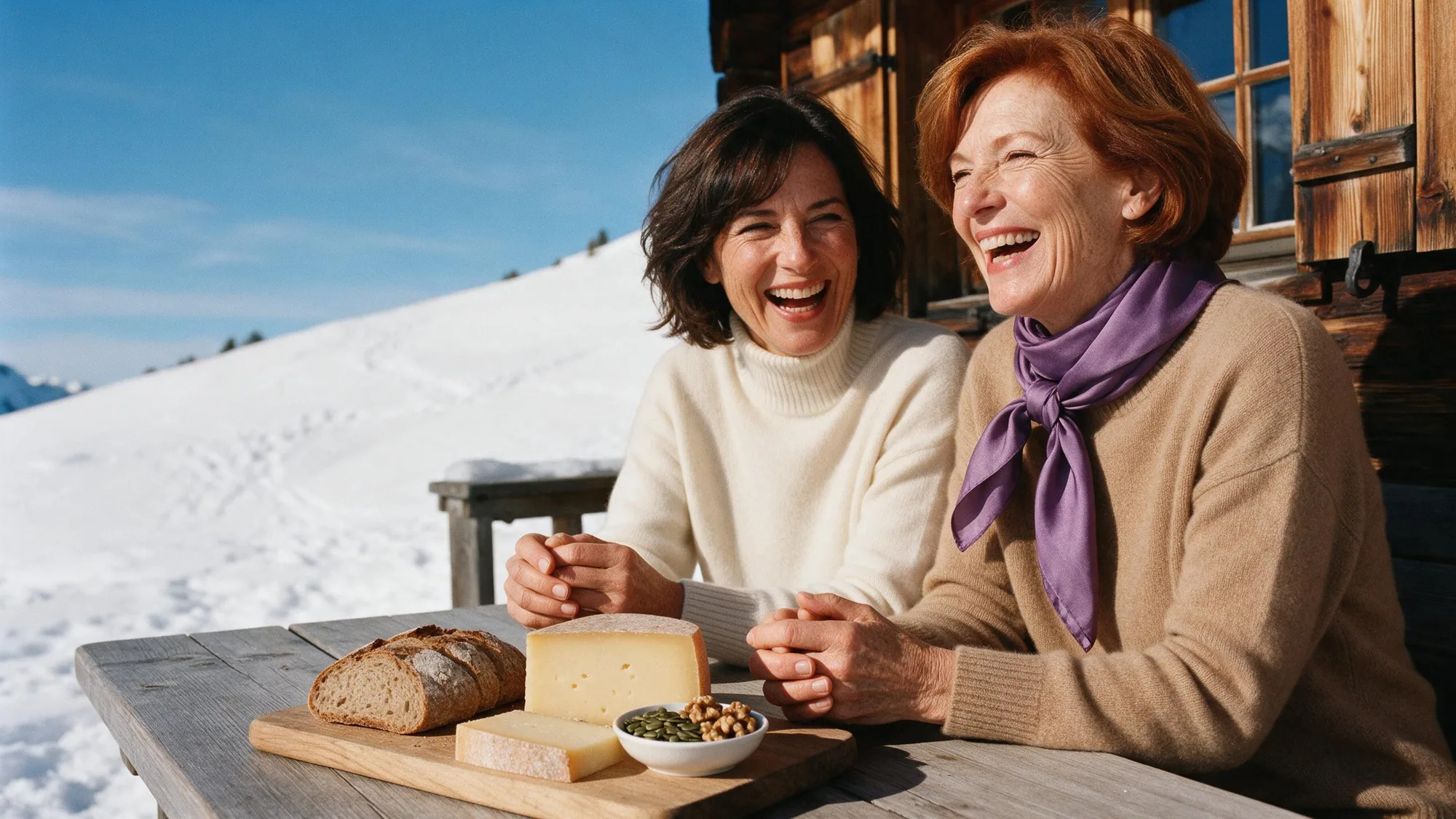
| Dairy products | Hard cheese, yoghurt, milk | Thirty grams of hard cheese make one portion according to the Swiss guidelines |
| Seeds and nuts | Pumpkin seeds, cashew nuts, peanuts | A small handful a day, according to the Swiss guidelines |
| Pulses | Lentils, chickpeas, beans | Contain phytates that slow absorption |
| Cereals | Oat flakes, wholemeal bread | Same remark on phytates |
| Eggs | Whole eggs | A modest but regular source |
The Swiss nutrition recommendations help you put this plate together without a calculator: one portion a day of a protein-rich food, varying the sources, two to three portions of dairy products, a small handful of unsalted nuts or seeds, and wholegrain cereals.
How can you tell if you are short of zinc?
You cannot tell on your own: the signs described for zinc deficiency are not very specific and resemble those of many other situations. Only a doctor can assess a deficiency, taking into account your diet, your treatments and any useful tests.
According to the National Institutes of Health, some people are at higher risk of lacking zinc: those who follow a strict vegetarian diet, those with certain digestive diseases, or those who drink too much alcohol. If you recognise yourself in one of these situations, talk to your doctor before taking a supplement.
Who should be careful with zinc?
Care is needed with zinc supplements if you are taking medication, several supplements, or are pregnant or breastfeeding. The National Institutes of Health report possible interactions with certain antibiotics and other medicines.
In all these cases, the reflex is the same: show the list of what you take to your pharmacist or your doctor. Already taking food supplements? Check your combined intake with your pharmacist or your doctor.
Zinc in our winter ritual
The You Are Magnifique winter ritual contains zinc, in the form of zinc gluconate, in the 5 ml drinkable bottle as well as in the 30 ml face serum, together with marine collagen peptides, vitamin C and hyaluronic acid. Zinc gluconate is a common form in food supplements.
The official zinc claims may only accompany the bottle if the conditions set by law are met; the key actives page presents them, together with the precautions. One 5 ml bottle a day, without exceeding this dose. If another supplement you take also contains zinc, ask your pharmacist or your doctor for advice.
Frequently asked questions
Is it good to take zinc every day?
The body needs zinc every day and does not store it: a varied diet generally supplies it. A supplement is only useful in certain situations and must not take you, from all sources combined, above the tolerable upper intake level of 25 mg a day for adults. Ask your pharmacist for advice.
What are the signs of a lack of zinc?
The signs described are not very specific: they resemble those of many other situations. Only a doctor can assess a deficiency. People on a strict vegetarian diet, those with certain digestive diseases or those who drink too much alcohol are at higher risk, according to the National Institutes of Health.
Who should not take zinc?
There is no single rule, but caution is called for if you are taking medication (certain antibiotics in particular), several supplements, or are pregnant or breastfeeding. Show the list of what you take to your pharmacist or your doctor before adding a zinc supplement.
Which food is richest in zinc?
Oysters, by far. Then come meat, crab, pumpkin seeds, hard cheese, oat flakes and lentils. Fruit and vegetables contain very little.
Is zinc good for the skin?
Swiss law authorises this sentence, and only under the conditions laid down: “Zinc contributes to the maintenance of normal skin.” It concerns zinc supplied by food or a supplement. Any other promise about the skin is not an authorised claim.
Sources
These sources establish general facts. They demonstrate nothing about You Are Magnifique products. Pages consulted on 23 November 2026.
- FDHA Ordinance on Food Information (SR 817.022.16), Annex 14 : authorised health claims for zinc and their conditions (page in French).
- EFSA, Scientific Opinion on Dietary Reference Values for zinc, EFSA Journal, 2014 : reference intakes according to dietary phytates.
- EFSA, Overview on Tolerable Upper Intake Levels, 2024 : 25 mg of zinc a day for adults.
- National Institutes of Health, Office of Dietary Supplements, Zinc : roles, foods, phytates, groups at risk, interactions, excess and copper.
- Federal Food Safety and Veterinary Office, Swiss nutrition recommendations for adults : portions of protein, dairy products, nuts and seeds (page in French).
This article is for information only and does not replace the advice of a doctor, a pharmacist or a dietitian.
Going further
Zinc sits alongside vitamin C in the winter formula. To learn how to read what a box promises, see how to read a food supplement label in Switzerland. Marie-José Joly, who signs these lines, ran an international school of aesthetics and cosmetics in Switzerland for more than fifteen years; her story is on the About page.
To take stock of your skin and your habits, the Magnifique Longevity Check asks eight questions, with no diagnosis and no medical advice. The In & Out duo page presents the winter ritual and its two gestures. You are magnificent. This ritual is here to remind you.

The author
Marie-José Joly, founder
For more than fifteen years, I ran an international school of aesthetics and cosmetics in Switzerland.
Read her storyKeep reading
How to adapt your beauty routine to the seasons after 50
Yes, it helps to adjust your routine through the year: in Switzerland, cold, heated air and UV intensity change markedly between January...
In & Out beauty: definition and meaning of the approach
In & Out beauty, also called inside-out beauty, links what we apply to the skin (Out) with what we do each day...