

Vitamin C is a vitamin the body cannot make: it comes from food. On the skin and the cells, Swiss law authorises two precise sentences. Here is what they say, how much to take in each day, and where to find it in winter, when summer fruit is far away.
What is vitamin C?
Vitamin C, or ascorbic acid, is a water-soluble vitamin that the human body cannot make. It therefore has to come from food, and regularly, because the body does not keep large reserves of it.
It takes part in many functions. What interests us here is its role in making collagen, the protein that forms the framework of the dermis. This is why its severe deficiency, scurvy, shows itself in particular on the skin and the gums, as the fact sheet of the Office of Dietary Supplements at the US National Institutes of Health points out.
What does Swiss law say about vitamin C and the skin?
In Switzerland, the authorised health claims are listed in Annex 14 of the FDHA Ordinance on Food Information. For vitamin C, two of them concern the skin and the cells directly. They must be quoted word for word:
- “Vitamin C contributes to normal collagen formation for the normal function of skin.”
- “Vitamin C contributes to the protection of cells from oxidative stress.”
These sentences may only appear on a food that is at least a source of vitamin C within the meaning of the law, that is, one that provides at least 15% of the nutrient reference value (for vitamin C, the reference value on the label is 80 mg a day). Any other promise about the skin, such as “radiance”, “luminous complexion” or a “fresh glow”, is not an authorised claim for a food or a food supplement.
The official list contains other claims for vitamin C (the immune system, tiredness and iron absorption, among others). Here we keep to those that concern the skin.
How much vitamin C a day?
EFSA, the European Food Safety Authority, sets the reference intake at 95 mg a day for adult women and 110 mg for men (scientific opinion of 2013). A varied diet, with five portions of fruit and vegetables a day as the Swiss nutrition recommendations advise, generally makes it possible to reach these amounts.
What matters most is regularity. Because the body stores little vitamin C, a colourful plate every day is worth more than a large quantity now and then.
Can you take too much?
Through food, this is very unlikely. With high-dose supplements, the National Institutes of Health fact sheet reports possible digestive upsets, such as nausea or diarrhoea. If you take several supplements, add up the amounts and talk to your pharmacist or your doctor: it is the best way to avoid excess.
Where to find vitamin C in winter?
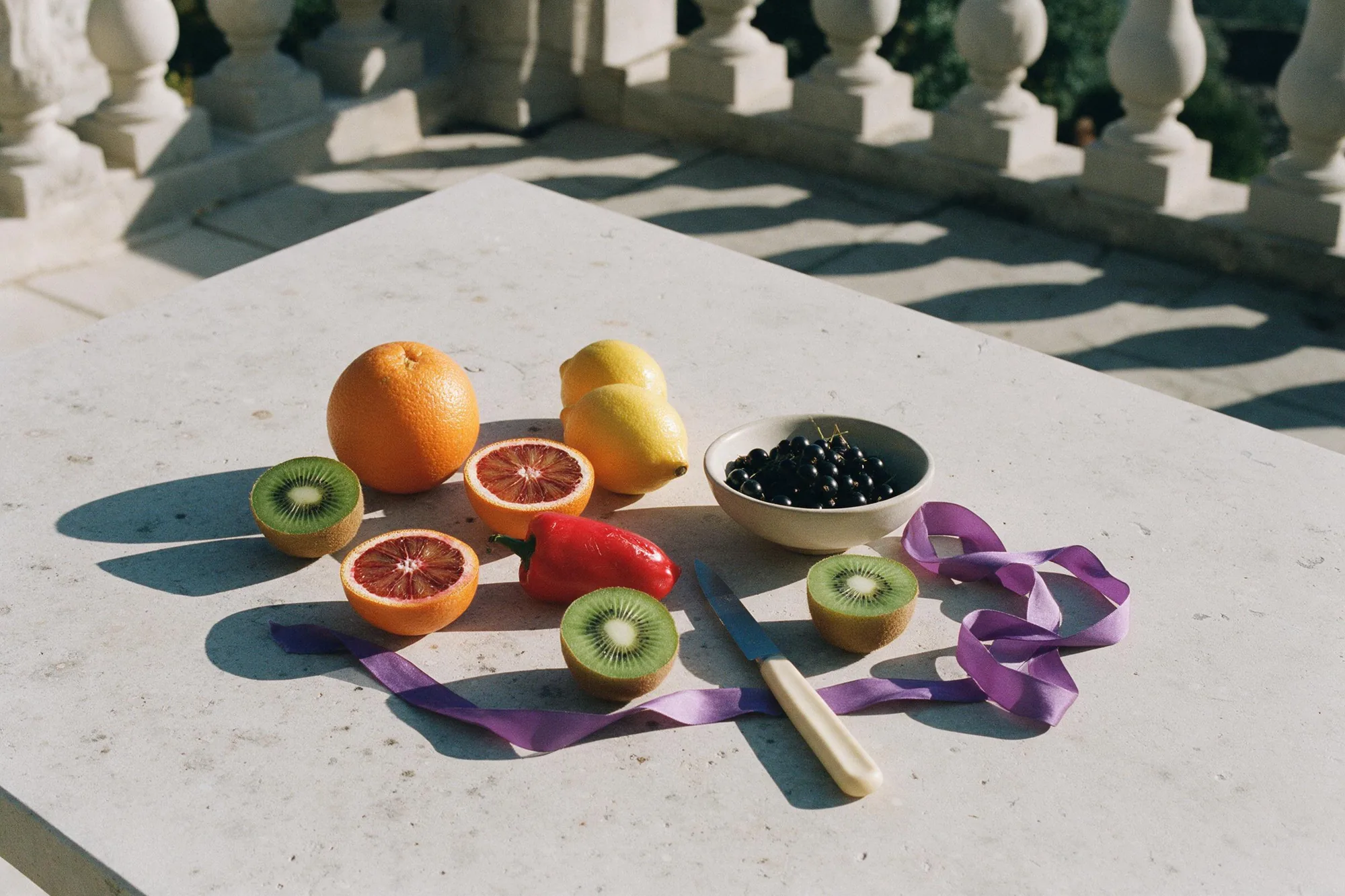
In winter, cabbages, peppers, broccoli, citrus fruit and kiwis supply plenty of vitamin C. Seasonal cabbages are a pleasant surprise: we think of oranges, but Brussels sprouts or kale supply it too.
| Food | Season in Switzerland | The right gesture |
|---|---|---|
| Red pepper | Imported in winter | Raw, in strips, or lightly pan-fried |
| Cabbages (Brussels sprouts, kale, red cabbage) | Winter vegetables | Short cooking, steamed |
| Broccoli | Autumn and early winter | Gently steamed, still crunchy |
| Oranges, clementines, grapefruit | Imported in winter | Whole, or squeezed just before drinking |
| Kiwi | Imported, keeps well | Plain, at breakfast |
| Parsley, chives | All year round | Raw, added at the last moment |
| Potatoes | All year round | Steamed or baked, in their skins |
According to the National Institutes of Health fact sheet, vitamin C breaks down with heat and prolonged storage, and it passes into the cooking water. Hence three simple habits: eat some of your fruit and vegetables raw, choose steaming over boiling water, and do not keep cut vegetables too long.
And vitamin C in a serum?
In a cosmetic, vitamin C is not governed by the same rules as in a food. CosIng, the European database of cosmetic ingredients, lists it in particular as an antioxidant, a function that protects the formula itself from oxidation, and as a skin conditioning agent.
What a serum may claim depends on its whole formula and on the evidence its manufacturer holds. Two practical pointers apply to every product that contains it: pure vitamin C oxidises easily in air and light, hence the value of a tightly closed bottle kept away from heat; and as with any new product, a test on a small area lets you check how your skin tolerates it.
How to choose a serum and where it fits in a routine are covered in our article serum or cream: the difference, the order and the choice.
Vitamin C in our winter ritual
The You Are Magnifique winter ritual contains vitamin C, in the 5 ml drinkable bottle as well as in the 30 ml face serum, together with marine collagen peptides, zinc gluconate and hyaluronic acid. The official claims may only accompany the bottle if the conditions set by law are met; the key actives page presents them with their precautions.
One bottle a day, without exceeding this dose. If another food supplement you take also contains vitamin C, ask your pharmacist or your doctor for advice. Already taking food supplements? Check your combined intake with your pharmacist or your doctor. And the ritual does not replace the plate: a food supplement does not replace a varied and balanced diet.
Frequently asked questions
Is it good to take vitamin C every day?
Yes, in the sense that the body needs it every day and does not keep large reserves. A varied diet, with five portions of fruit and vegetables, generally covers the reference intake of 95 mg a day for an adult woman. A supplement is only useful in certain situations, to be discussed with your pharmacist or your doctor.
What does vitamin C do for the face?
For vitamin C supplied by food or a supplement, Swiss law authorises one precise sentence: “Vitamin C contributes to normal collagen formation for the normal function of skin.” In a cosmetic, what the product may claim depends on its formula and on its manufacturer’s evidence.
What are the downsides of vitamin C?
In high doses, from supplements, it can cause digestive upsets, according to the National Institutes of Health. Through food, the risk of excess is very low. If you are on a treatment or take several supplements, check your combined intake with your pharmacist or your doctor.
Which foods are richest in vitamin C?
Among the richest: peppers, cabbages, broccoli, kiwis, citrus fruit, blackcurrants and fresh herbs such as parsley. Raw or briefly steamed, they keep more of it.
Are vitamin C and collagen linked?
Yes: vitamin C takes part in the body’s production of collagen. That is the meaning of the official claim on the skin. Collagen itself has no authorised health claim in Switzerland. Our article on collagen explains why.
Sources
These sources establish general facts. They demonstrate nothing about You Are Magnifique products. Pages consulted on 23 November 2026.
- FDHA Ordinance on Food Information (SR 817.022.16), Annex 14 : authorised health claims for vitamin C and their conditions (page in French).
- EFSA, Scientific Opinion on Dietary Reference Values for vitamin C, EFSA Journal, 2013 : 95 mg a day for women, 110 mg for men.
- National Institutes of Health, Office of Dietary Supplements, Vitamin C : role in collagen, scurvy, foods, losses in cooking, digestive upsets at high doses.
- Federal Food Safety and Veterinary Office, Swiss nutrition recommendations for adults : five portions of seasonal fruit and vegetables a day (page in French).
- European Commission, CosIng, cosmetic ingredient database : listed functions of cosmetic ingredients.
This article is for information only and does not replace the advice of a doctor, a pharmacist or a dietitian.
Going further
Vitamin C is not alone in the winter formula: read zinc and the skin, then how to read a food supplement label in Switzerland. Marie-José Joly, who signs these lines, ran an international school of aesthetics and cosmetics in Switzerland for more than fifteen years; her story is on the About page.
To take stock of your skin and your habits, the Magnifique Longevity Check asks eight questions, with no diagnosis and no medical advice. The In & Out duo page presents the winter ritual and its two gestures. You are magnificent. This ritual is here to remind you.

The author
Marie-José Joly, founder
For more than fifteen years, I ran an international school of aesthetics and cosmetics in Switzerland.
Read her storyKeep reading
How to adapt your beauty routine to the seasons after 50
Yes, it helps to adjust your routine through the year: in Switzerland, cold, heated air and UV intensity change markedly between January...
In & Out beauty: definition and meaning of the approach
In & Out beauty, also called inside-out beauty, links what we apply to the skin (Out) with what we do each day...